Denmark has 4,815 power plants in this atlas, with 14,175 MW of reported capacity. The largest listed plant is Avedoerevaerket (Avedøre) (815 MW, coal; current status unverified). By number of records the most common technologies are wind, solar and coal. Grid operators listed here include Energinet. Electricity is regulated by Danish Utility Regulator. Renewables supplied 89.2% of its electricity in 2024.
Reported capacity is the rated size of the listed installations, not electricity being produced now. Source dates and coverage differ, so newer facilities may be absent and historical records may remain.
THE ELECTRICITY SYSTEM IN CONTEXT
Denmark: wind, combined heat and power, and cross-border balancing
Reporting scope: Energy in Denmark 2024 (report version available September 2026).
Electricity installations also serve heat demand
The Danish Energy Agency's 2024 report describes wind's growing role in domestic electricity supply and distinguishes large combined heat and power units from wind, solar and other producer types. For a thermal installation, check whether the source describes electricity-only generation or joint electricity and district-heat production.
The same report explains Denmark's role as a transit country between Nordic and continental European power markets. Domestic renewable generation, imports, exports and consumption are separate quantities. Counting Danish wind records cannot show the electricity mix consumed at a particular time.
By Power Stations Worldwide · Context sources checked · Review scope. This date does not update the underlying plant inventory or electricity series.
Grid operators and electricity market in Denmark
Liberalised marketCompetitive generation and retail
Western Denmark is synchronised with Continental Europe and eastern Denmark with the Nordic grid. Wind supplies over half of electricity, traded through Nord Pool.
Part of the synchronous grid of Continental Europe, the largest interconnected grid in the world by customers, coordinated by the European Network of Transmission System Operators for Electricity.
Part of the Nordic synchronous area shared by Norway, Sweden, Finland and eastern Denmark, with a common power exchange across the region.
What does “Liberalised market” mean?
Generators sell into a wholesale market, an independent operator runs the transmission grid, and households can choose their electricity supplier. Networks stay regulated monopolies because building parallel power lines makes no sense.
References reviewed 2026-09-29. Logos are each organisation’s own site icon, shown to identify it. Selected organisations, not an exhaustive list of licence holders.
Denmark comprises the Jutland peninsula and an archipelago between the North Sea and Baltic Sea. Its low relief and extensive maritime edges are central to understanding the geography of wind energy.
Capital
Copenhagen
Languages
Danish
Major cities
Copenhagen, Aarhus, Odense
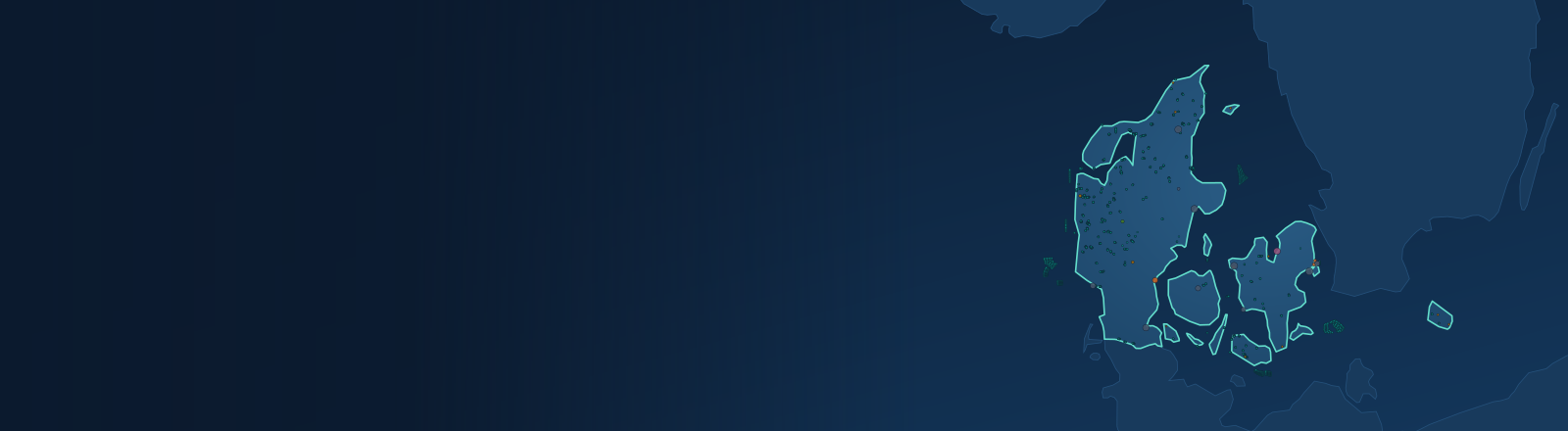
Geographic reference: European Union country profile. Boundaries and names are for orientation; language listings are introductory, not exhaustive. Banner map: Natural Earth boundaries (public domain) with this atlas’s station records.
The source inventory contains 4,815 records for Denmark. Select a fuel in the map to explore where its stations are located, then open a record to inspect reported capacity and provenance.
Inventory coverage
4,815 source records. 0 reported operational in their source snapshot; this is not live status.
Browse 4,815 source records, ordered by reported capacity. Ownership and operating status describe the source snapshot; they may have changed. Missing information is shown explicitly.