Ethiopia has 13 power plants in this atlas, with 4,024 MW of reported capacity. The largest listed plant is Gilgel Gibe III (1,870 MW, hydro; current status unverified). By number of records the most common technologies are hydro, geothermal and wind. Grid operators listed here include Ethiopian Electric Power. Electricity is regulated by Petroleum and Energy Authority. Renewables supplied 100% of its electricity in 2024.
Reported capacity is the rated size of the listed installations, not electricity being produced now. Source dates and coverage differ, so newer facilities may be absent and historical records may remain.
Grid operators and electricity market in Ethiopia
Vertically integrated utilityOne utility does everything
The Grand Ethiopian Renaissance Dam and other hydro plants supply almost all power, with exports to Kenya and Djibouti.
Member of the Eastern Africa Power Pool, which coordinates cross-border lines and power trade between eastern African utilities.
What does “Vertically integrated utility” mean?
A single, usually state-owned utility generates, transmits and distributes electricity. Prices are set or approved by the government or a regulator rather than by a market.
References reviewed 2026-09-29. Logos are each organisation’s own site icon, shown to identify it. Selected organisations, not an exhaustive list of licence holders.
Ethiopia is in Eastern Africa. Its landlocked geography makes cross-border connections an important part of its regional setting. This profile connects country reference information with the historical station inventory and reported electricity generation.
Capital
Addis Ababa
Languages
Amharic
Region
Eastern Africa
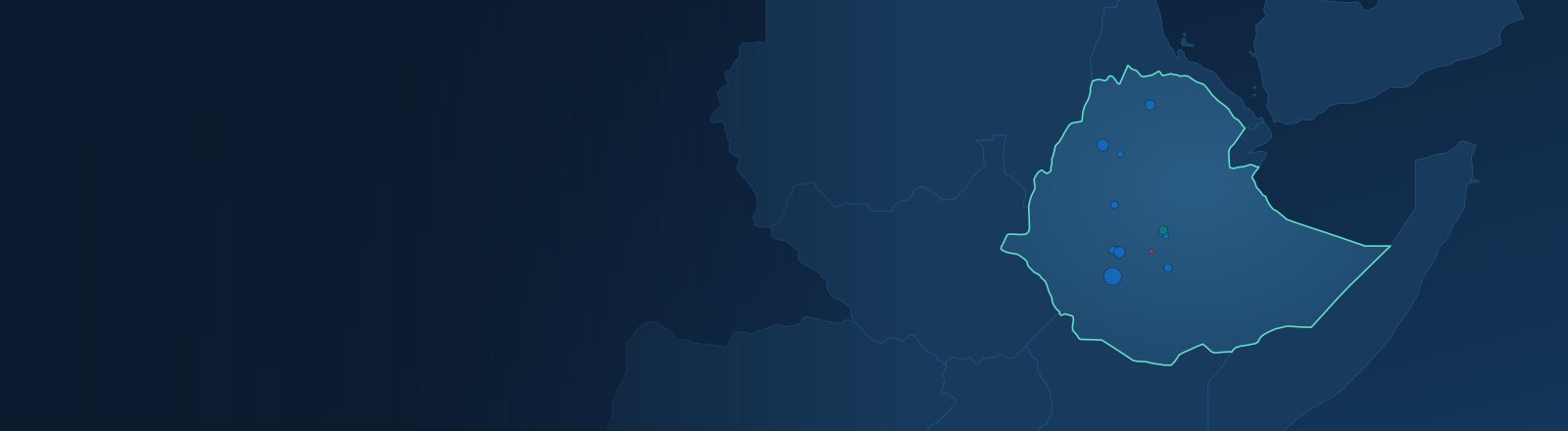
Geographic reference: Countries geographic database (ODbL). Boundaries and names are for orientation; language listings are introductory, not exhaustive. Banner map: Natural Earth boundaries (public domain) with this atlas’s station records.
The source inventory contains 13 records for Ethiopia. Select a fuel in the map to explore where its stations are located, then open a record to inspect reported capacity and provenance.
Inventory coverage
13 source records. 0 reported operational in their source snapshot; this is not live status.
Browse 13 source records, ordered by reported capacity. Ownership and operating status describe the source snapshot; they may have changed. Missing information is shown explicitly.