Reported capacity is the rated size of the listed installations, not electricity being produced now. Source dates and coverage differ, so newer facilities may be absent and historical records may remain.
How electricity works in Palestine
Single buyerOne state buyer, private generators
Most electricity is bought from the Israel Electric Corporation, with local solar.
No open power exchange: producers sell to the single buyer under long-term contracts.
Regional grid
Not part of a larger synchronous grid or regional power pool.
What does “Single buyer” mean?
Independent power producers build plants and sell their output under long-term contracts to one designated state buyer, usually the national utility, which runs the grid and sells to consumers.
PETL is the national transmission-company reference. This does not imply one fully interconnected system or describe every local provider, including arrangements in Gaza.
References reviewed 2026-09-29. Logos are each organisation’s own site icon, shown to identify it. Selected organisations, not an exhaustive list of licence holders.
Palestine is in Western Asia. Its coastal or island geography provides a different setting for electricity infrastructure from inland systems. This profile connects country reference information with the historical station inventory and reported electricity generation.
Capital
Ramallah
Languages
Arabic
Region
Western Asia
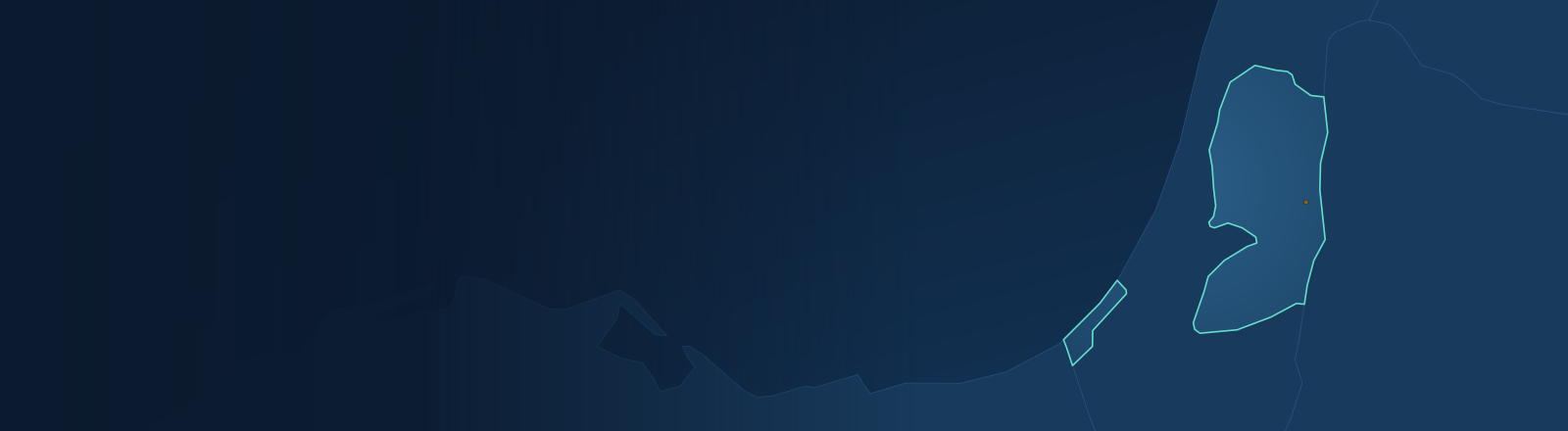
Geographic reference: Countries geographic database (ODbL). Boundaries and names are for orientation; language listings are introductory, not exhaustive. Banner map: Natural Earth boundaries (public domain) with this atlas’s station records.
The source inventory contains 1 records for Palestine. Select a fuel in the map to explore where its stations are located, then open a record to inspect reported capacity and provenance.
Inventory coverage
1 source record. 0 reported operational in their source snapshot; this is not live status.
Browse 1 source records, ordered by reported capacity. Ownership and operating status describe the source snapshot; they may have changed. Missing information is shown explicitly.