Power StationsWORLDWIDETHE GLOBAL EDITION 01
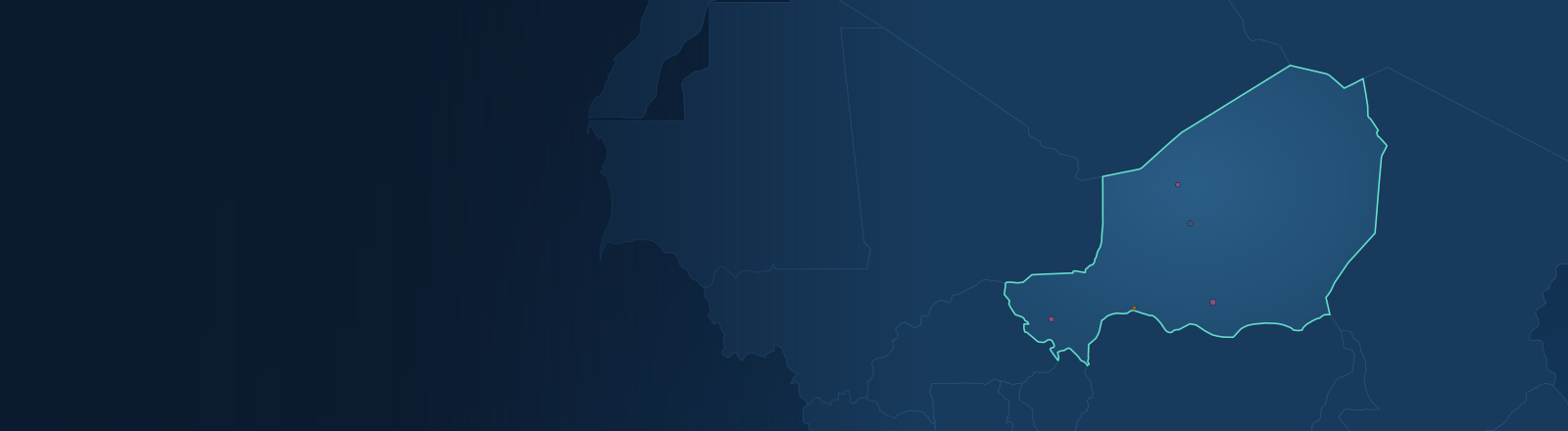
Map of 7 power plants in Niger, coloured by fuel and sized by capacity
← Country directoryNER / COUNTRY PROFILE

Power plants in Niger

7 power-plant records · 167 MW reported capacity

  • Oil 71%
  • Coal 14%
  • Solar 14%
Explore Niger on the map

Niger at a glance

Power-plant records
7
Reported capacity
167 MW
Renewable electricity (2024)
3.2%
Most records
Oil, Coal
Capital
Niamey

Largest listed power plants

  1. 1Soraz54 MW
  2. 2Anou Araren Mine38 MW
  3. 3Niamey28 MW
  4. 4Goudel15 MW
  5. 5Arlit Mine15 MW
Full list of power plants in Niger ↓

Records by technology

Counts records, not generation share · coverage & dates

Reported capacity is the rated size of the listed installations, not electricity being produced now. Source dates and coverage differ, so newer facilities may be absent and historical records may remain.

How electricity works in Niger

Vertically integrated utilityOne utility does everything

Most power is imported from Nigeria, with local oil and solar plants.

  1. GenerationState utility
  2. TransmissionState utility
  3. DistributionState utility
  4. CustomersGovernment-set tariffs

Who regulates

  • ARSEEnergy regulator

Who controls the grid

State-owned NIGELEC runs distribution.

Markets & power exchanges

No power exchange: the utility produces or buys electricity and sells it at set tariffs.

Regional grid

  • West African Power PoolRegional grid

    Member of the West African Power Pool, the ECOWAS body building interconnectors and a regional electricity market across West Africa.

What does “Vertically integrated utility” mean?

A single, usually state-owned utility generates, transmits and distributes electricity. Prices are set or approved by the government or a regulator rather than by a market.

References reviewed 2026-09-29. Logos are each organisation’s own site icon, shown to identify it. Selected organisations, not an exhaustive list of licence holders.

Browse the worldwide operator directory
ELECTRICITY IN 2024

How Niger generates electricity

Electricity generated0.95 TWh
Renewable share3.2%
Low-carbon share3.2%
Carbon intensity673.7 gCO₂e/kWh

Electricity mix 2024

Annual generation by source · terawatt-hours (TWh)

Hydro0 TWh
Wind0 TWh
Solar0.03 TWh
Bioenergy0 TWh
Other renewables0 TWh
Nuclear0 TWh
Coal0.17 TWh
Gas0.05 TWh
Other fossil0.7 TWh

Missing categories are labelled “No data”. Rounding can cause small differences from the reported total.

Source: Ember (2026), processed by Our World in Data · CC BY 4.0 · Snapshot 24 April 2026. Method & download details.

Explore trends & country comparisons

Geography and data notes

Niger is in Western Africa. Its landlocked geography makes cross-border connections an important part of its regional setting. This profile connects country reference information with the historical station inventory and reported electricity generation.

Capital
Niamey
Languages
French
Region
Western Africa

Geographic reference: Countries geographic database (ODbL). Boundaries and names are for orientation; language listings are introductory, not exhaustive. Banner map: Natural Earth boundaries (public domain) with this atlas’s station records.

The source inventory contains 7 records for Niger. Select a fuel in the map to explore where its stations are located, then open a record to inspect reported capacity and provenance.

Inventory coverage

7 source records. 0 reported operational in their source snapshot; this is not live status.

7 lack an owner/operator; 7 lack a commissioning year.

Coverage, dates & exclusions
THE GENERATION INVENTORY

List of power plants in Niger

Open country map

Browse 7 source records, ordered by reported capacity. Ownership and operating status describe the source snapshot; they may have changed. Missing information is shown explicitly.

7 matching records · showing 7

Malbaza

Solar
7 MW
Owner in source
Not reported
Operator in source
Not reported
Commissioned
Not reported
Source status
Operating status unverified
Wiki-Solar · historical recordDetails & map

MW measures rated capacity, not electricity generated. Records may describe units, installations, projects or whole complexes. Review inventory coverage and licenses. Download this country’s records.