Norway has 1,897 power plants in this atlas, with 40,636 MW of reported capacity. The largest listed plant is Kvilldal (1,240 MW, hydro). By number of records the most common technologies are hydro, wind and storage. Grid operators listed here include Statnett. Electricity is regulated by RME (NVE). Renewables supplied 98.6% of its electricity in 2024.
Reported capacity is the rated size of the listed installations, not electricity being produced now. Source dates and coverage differ, so newer facilities may be absent and historical records may remain.
THE ELECTRICITY SYSTEM IN CONTEXT
Norway: reservoirs connect seasonal water supply to electricity demand
Reporting scope: Reservoir operating principles; not a live generation report.
Stored water has a seasonal value
Norway's energy regulator explains that snowmelt replenishes reservoirs in spring and summer, while colder months bring higher demand and use of saved water. Hydropower producers weigh the value of generating now against retaining water for later demand. A reservoir is therefore more than a marker for installed turbine capacity.
NVE highlights uncertainty in future inflows and electricity use. A station's MW rating does not specify how much usable water remains, how long output can continue or what other reservoirs constrain its operation. Follow the hydropower guide to separate rated power, stored energy and annual generation.
By Power Stations Worldwide · Context sources checked · Review scope. This date does not update the underlying plant inventory or electricity series.
Grid operators and electricity market in Norway
Liberalised marketCompetitive generation and retail
Almost all electricity comes from hydropower. Norway has five price zones traded through Nord Pool; the government pays part of household bills when prices are high.
Part of the Nordic synchronous area shared by Norway, Sweden, Finland and eastern Denmark, with a common power exchange across the region.
What does “Liberalised market” mean?
Generators sell into a wholesale market, an independent operator runs the transmission grid, and households can choose their electricity supplier. Networks stay regulated monopolies because building parallel power lines makes no sense.
References reviewed 2026-09-29. Logos are each organisation’s own site icon, shown to identify it. Selected organisations, not an exhaustive list of licence holders.
Norway is in Northern Europe. Its coastal or island geography provides a different setting for electricity infrastructure from inland systems. This profile connects country reference information with the historical station inventory and reported electricity generation.
Capital
Oslo
Languages
Norwegian Nynorsk, Norwegian Bokmål, Sami
Region
Northern Europe
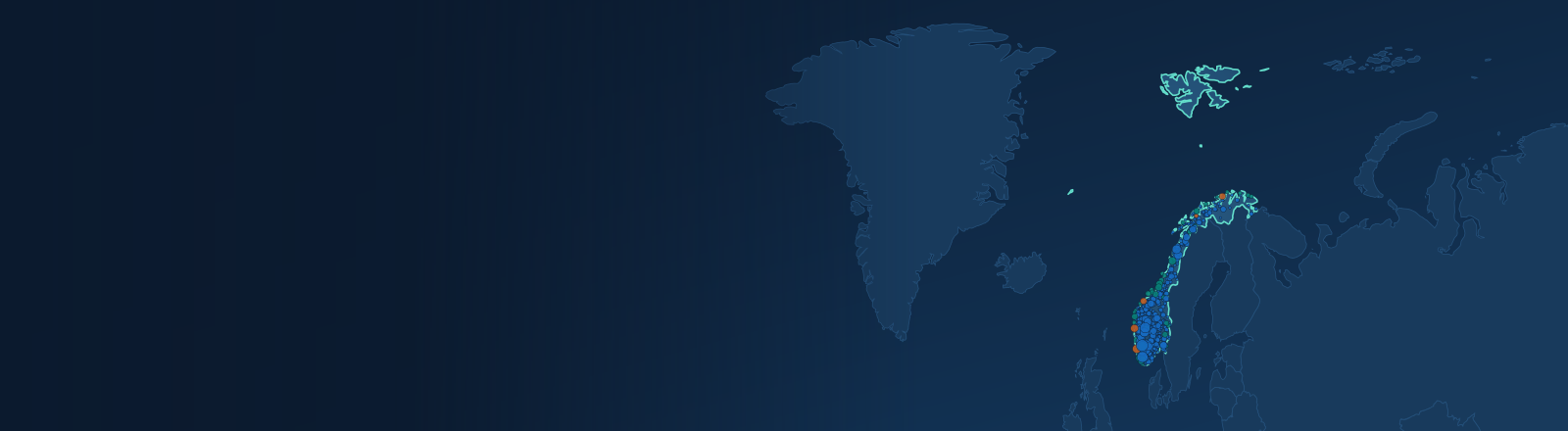
Geographic reference: Countries geographic database (ODbL). Boundaries and names are for orientation; language listings are introductory, not exhaustive. Banner map: Natural Earth boundaries (public domain) with this atlas’s station records.
The source inventory contains 1,897 records for Norway. Select a fuel in the map to explore where its stations are located, then open a record to inspect reported capacity and provenance.
Inventory coverage
1,897 source records. 1,892 reported operational in their source snapshot; this is not live status.
Browse 1,897 source records, ordered by reported capacity. Ownership and operating status describe the source snapshot; they may have changed. Missing information is shown explicitly.